


New Mexico Piñon Coffee: Ground, Whole Bean or Pods?
Choose New Mexico Piñon Coffee by brewer and gift recipient. Compare ground, whole bean and pods, learn what it contains, and buy from the roaster or Amazon.
New Mexican cuisine is a distinct chile-centered food tradition of the U.S. state. Learn the red-or-green question and the origins of carne adovada, sopaipillas, posole, biscochitos, and green chile cheeseburgers.
New Mexican cuisine is the food tradition of the U.S. state of New Mexico. It is distinct from both Tex-Mex and the many regional cuisines of Mexico. Shared ingredients and long histories connect these traditions, but the name “New Mexican” identifies its own regional cuisine.
Chile is its organizing thread. Red and green chile can come from the same kind of pepper at different stages of ripeness: green pods are picked before full maturity, while red pods remain on the plant longer. Modern growers also use cultivars bred separately for green and red production.
That choice appears on restaurant tables, in state law, and across home and community food traditions. It is a practical question with unusual official status.
“Red or green?” is New Mexico’s official state question, codified at NMSA 1978 Section 12-3-4. The New Mexico Secretary of State dates the legislative adoption to 1996.
The state also has an official answer: “Red and green or Christmas.” Ordering Christmas means both red and green chile on the same plate. The answer was adopted in 2007, giving New Mexico both an official question and an official answer centered on chile.
The question is not a contest with one statewide winner. It names a choice between chile at different stages, preparations, and heat levels. Heat can vary by cultivar and growing conditions, so color alone does not settle how hot a chile will be.
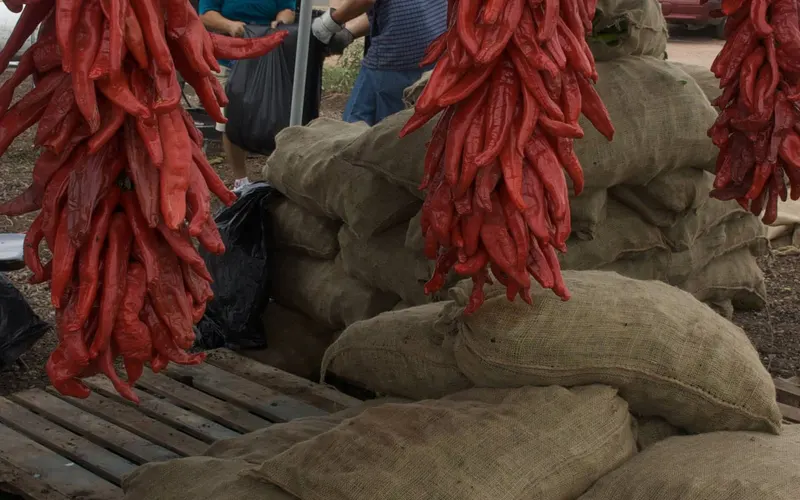
These foods remain part of living Hispano, Pueblo, and wider New Mexican family and community traditions. A short description can identify each dish, but it cannot reduce those traditions to a checklist.
Carne adovada is pork, commonly shoulder, marinated and slowly braised in a sauce based on dried New Mexico red chile pods. It is a braise rather than a grilled dish. The regional spelling “adovada” also distinguishes the New Mexican name from the broader Mexican term “adobada.”
New Mexican sopaipillas are hollow, puffed fried breads. They can accompany chile as part of the meal or be served with honey afterward. New Mexico commonly uses the spelling with the second “i,” while “sopapilla” is more common in Texas and elsewhere. Several origin stories circulate, so no single invention claim is treated as settled here.
Posole is a stew built around hominy, the dried field corn transformed through nixtamalization, commonly served with pork and red or green chile in New Mexico. It is a fixture of winter holiday tables, especially around Christmas Eve and New Year’s, often alongside tamales and biscochitos.
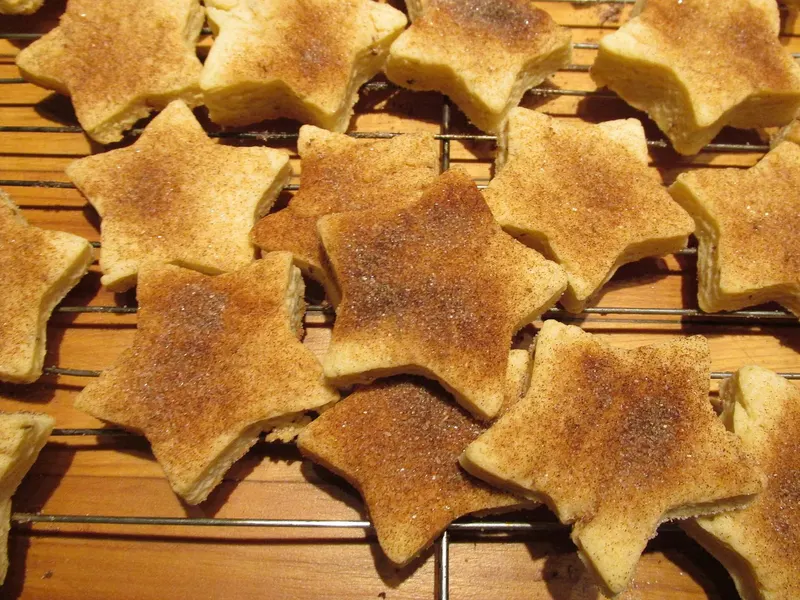
Biscochitos are small anise-and-cinnamon shortbread cookies traditionally made with lard. They came to New Mexico through Spanish colonial history and remain tied to weddings, baptisms, family celebrations, and especially Christmas. New Mexico designated the bizcochito, using the statute’s Z spelling, as its official state cookie in 1989.
The New Mexico green chile cheeseburger adds green chile to the hamburger and carries a documented rivalry between the Owl Bar and Buckhorn Tavern in San Antonio. A Socorro County historian told New Mexico Magazine that he could not prove which opened first. New Mexico Tourism maintains an official Green Chile Cheeseburger Trail with an interactive statewide map, without publishing a fixed stop count in the page text.
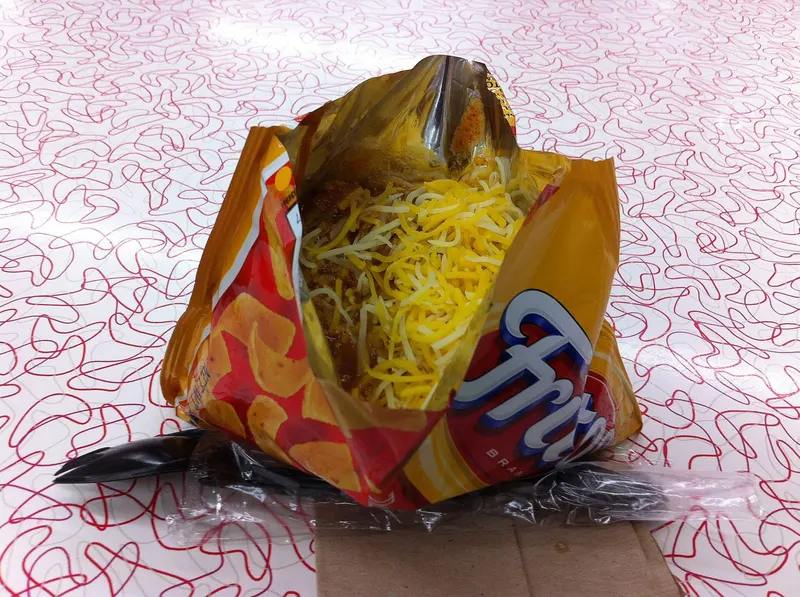
The collection below follows four subjects where the documentation adds more than a dish definition: piñon coffee and its nut-free modern formulation, the state-cookie statute and holiday tradition behind biscochitos, the legal and agricultural meaning of Hatch chile, and the disputed history preserved at Santa Fe’s frito-pie counter.
Our New Mexico pinon coffee guide compares ground coffee, whole bean and pods, explains the maker’s current formulation, and includes both direct-roaster and Amazon shopping options.
Choose New Mexico Piñon Coffee by brewer and gift recipient. Compare ground, whole bean and pods, learn what it contains, and buy from the roaster or Amazon.
New Mexico is most closely identified with chile-centered food. Red or green chile runs through dishes such as enchiladas, carne adovada, and the green chile cheeseburger, and it is important enough to anchor the state's official question.
Classic dishes include carne adovada, a pork and red chile braise; green chile cheeseburgers; biscochitos, the anise-and-cinnamon state cookie; sopaipillas, hollow fried breads served with meals or honey; and posole, a hominy stew associated with winter holidays.
Carne adovada is pork, commonly shoulder, marinated and slowly braised in a red chile sauce made from dried New Mexico chile pods. That is a cultural description of the dish, not a set of instructions.
Carne asada centers on grilled meat. New Mexican carne adovada is pork braised in red chile, so the defining contrast is grilling versus a chile braise.
A New Mexican sopaipilla is a hollow, puffed fried bread. It may accompany chile during a meal or arrive with honey as a sweet finish.
The word comes from the Spanish sopaipa, while New Mexico's sopaipilla tradition reflects Spanish colonial and Indigenous influences. Competing origin stories are not settled. New Mexico usually favors the spelling sopaipilla and often serves it with the meal, unlike the dessert-first Tex-Mex custom.
Official visitor information: New Mexico Secretary of State: State Question, NMSA 1978 Section 12-3-4 state symbols, New Mexico Tourism cuisine overview, New Mexico Tourism Green Chile Cheeseburger Trail, New Mexico Secretary of State: State Cookie, New Mexico Cultural Encyclopedia: sopaipilla, New Mexico Magazine: green chile cheeseburger history, Tomasita's: New Mexican posole holiday tradition.
Photography via Wikimedia Commons. Images resized and cropped for layout; individual credits and reuse licenses are listed below.
Guide details checked . Confirm current conditions before traveling.