Ski & Winter
New Mexico Ski Resorts
New Mexico has nine downhill ski areas, all with bases above 8,200 feet. The practical ski window is roughly late November through early April, but conditions control every opening and closing. High elevation and snowmaking shape the season more than latitude alone.
Open markers are areas on the roster whose guide has not published yet.
Statewide roster
Nine downhill ski areas
Mountain statistics are stable planning references, not a live conditions report. Unpublished figures stay marked instead of being estimated.
| Ski area | Summit / vertical | Acres / lifts | Pass access |
|---|---|---|---|
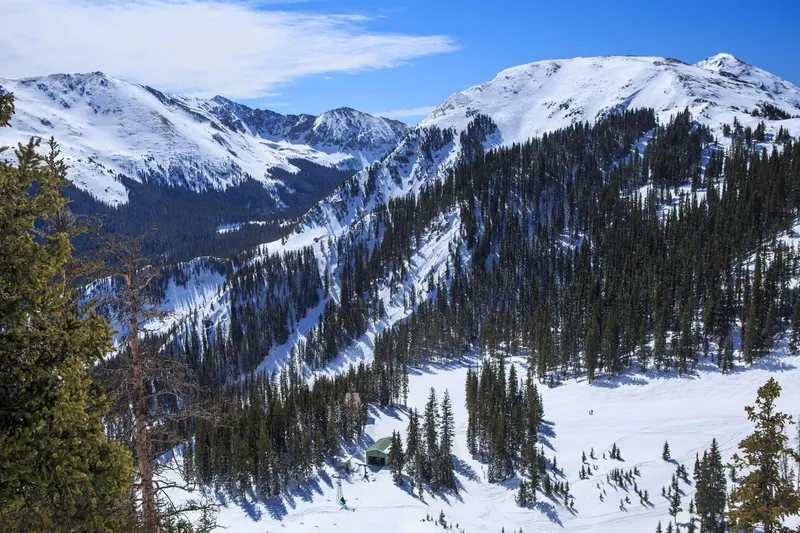
Taos Ski ValleyNear TaosExpert steeps and snow-dependent hike-to terrain below Kachina Peak. | 12,481 ft summit 3,131 ft vertical | 1,294 acres 13 lifts | Ikon Pass, Mountain Collective |
Ski Santa FeNear Santa FeHigh-elevation terrain and aspen glades 16 miles from Santa Fe. | 12,075 ft summit 1,725 ft vertical | 660 acres 7 lifts | None listed |
Ski ApacheNear AltoSouthern New Mexico terrain with an intermediate emphasis and an eight-passenger gondola. | 11,400 ft summit 1,900 ft vertical | 750 acres 11 lifts | None listed |
Angel Fire ResortNear Angel FireA family-oriented resort with night skiing and three terrain parks. | 10,677 ft summit 2,077 ft vertical | 560 acres 8 lifts | Powder Alliance |
Red River Ski + Summer AreaNear Red RiverLifts rise from the family-owned ski town on the Enchanted Circle. | 10,350 ft summit 1,600 ft vertical | 285 acres 7 lifts | Freedom Pass |
Sipapu Ski & Summer ResortNear VaditoNew Mexico’s oldest ski resort and a regular early opener on NM-518. | 9,255 ft summit 1,055 ft vertical | 215 acres 6 lifts | Power Pass |
Pajarito MountainNear Los AlamosAn uncrowded local hill five miles west of Los Alamos.Guide in progress | 10,440 ft summit 1,400 ft vertical | 280 acres Not published lifts | Power Pass |
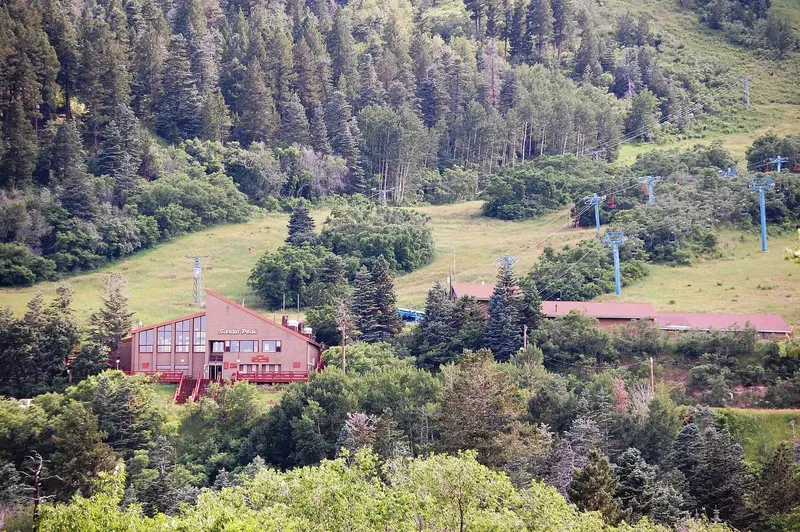
Sandia Peak Ski AreaNear AlbuquerqueAlbuquerque-area skiing rebuilding under new management after a roughly five-week 2025–26 season. | 10,378 ft summit 1,700 ft vertical | 300 acres 4 lifts | Power Pass |
Ski CloudcroftNear CloudcroftNew Mexico’s southernmost ski area, two miles east of Cloudcroft on US-82.Guide in progress | 9,100 ft summit 700 ft vertical | Not published acres 3 lifts | None listed |
Start planning with elevation, not latitude
Every downhill base in the statewide roster is above 8,200 feet. Sipapu is the lowest at 8,200 feet, while Ski Santa Fe starts at 10,350 feet. That elevation helps explain why a state associated with high-desert landscapes can support a nine-area ski roster, but it also changes trip planning before the first lift ride.
The CDC’s high-altitude guidance says the risk of altitude illness begins above 8,000 feet. It advises gradual ascent, avoiding a jump from low elevation to sleeping above 9,000 feet in one day, and limiting further increases in sleeping elevation above 9,000 feet to 1,600 feet per day. The CDC also advises avoiding alcohol and heavy exercise during the first 48 hours at altitude. Headache, tiredness, appetite loss, and nausea can be signs of acute mountain sickness; symptoms that worsen while resting call for descent and medical care.
Those thresholds apply to every New Mexico ski base in this directory. A practical itinerary can put a lower-elevation night before a high-base ski day, keep the arrival day light, and leave room to change plans if symptoms develop.
Treat the mountain road as part of the ski day
The three first-wave areas use distinct mountain approaches: NM-150 reaches Taos Ski Valley through Arroyo Seco, NM-475 climbs from Santa Fe to Ski Santa Fe, and NM-532 serves Ski Apache as Ski Run Road. Conditions and vehicle requirements can differ by road and by storm. NMRoads is the state’s official road-advisory system, and NMDOT’s travel page also points travelers to 511 and its travel-information tools.
Official resort guidance is more specific. Taos Ski Valley says AWD, 4WD, or chains are required for winter travel to the valley. Ski Santa Fe strongly recommends four-wheel drive or all-wheel drive with winter tires and says chains may be required during heavy snow. Ski Apache describes Ski Run Road as paved and maintained, but also notes steep grades, sharp curves, and elevation changes; it advises carrying winter tires and chains and checking state road information.
The season itself is conditional. State tourism guidance says opening and closing dates depend on conditions, and the statewide pattern is roughly late November through early April. An announced date is therefore a planning marker rather than a snow guarantee.
- Taos Ski Valley
- 12,481 ft
- Ski Cloudcroft
- 9,100 ft
- Spread across the roster
- 3,381 ft
The dashed rule marks 8,000 ft, the CDC altitude-illness threshold.
Which New Mexico ski area suits which trip?
There is no single best area here, and the roster is small enough that the honest answer is a match rather than a ranking. Four published numbers separate the nine: skiable acres, vertical drop, the beginner-intermediate-expert split, and how far the mountain road climbs from the nearest town.
Taos Ski Valley is the largest on every published measure, with 1,294 acres, 3,131 feet of vertical and 110 trails, and its 51% expert split is the reason for its reputation. That same guide records snowmaking on close to all of its beginner and intermediate terrain, so the mountain is not the expert-only proposition the number alone suggests. Ski Apache sits at the other end of the mix at 60% intermediate across 55 trails, the most cruiser-weighted split on the roster. Ski Santa Fe is 16 miles from the city at the end of NM-475, and the North Central Regional Transit District’s Mountain Trail bus runs there daily from downtown, so it is the one area a trip can reach without a car.
Scale is not the only axis. Sipapu is the smallest northern area at 215 acres and has the lowest base in the state at 8,200 feet, which makes it the gentlest introduction to New Mexico altitude. Angel Fire offers what the resort identifies as New Mexico’s only night skiing. At Red River the lifts rise from the town itself: state tourism says Main Street doubles as a ski run and most lodging is steps from the base, so a short walk replaces the mountain drive. Sandia Peak is 35 miles northeast of Albuquerque, about a 45-minute drive by the operator’s estimate, and it is also the area whose recent operating record most needs checking before a trip is built around it.
Three of these sit on the 84-mile Enchanted Circle loop, so a multi-day trip does not have to pick one. A single-day trip usually should, and the deciding factor is more often the drive and the altitude than the acreage. Planning a whole winter trip rather than a ski day widens the choice further.
Understand the pass map before choosing a base
Pass relationships were checked on July 21, 2026 and should be verified again for the travel season. The Power Pass groups Sipapu, Pajarito Mountain, and Sandia Peak in New Mexico; the Power Pass Core terms list unlimited access to those three. Taos Ski Valley is New Mexico’s only Ikon destination and is also a Mountain Collective partner, while remaining independently owned.
Two other resorts participate through reciprocal programs rather than the statewide pass groups: Angel Fire lists Powder Alliance benefits, and Red River lists Freedom Pass reciprocity. Ski Santa Fe, Ski Apache, and Ski Cloudcroft are not listed with the major multi-resort products in the checked official material. No New Mexico resort is part of Epic Pass.
The distinction matters when comparing a one-mountain trip with a multi-stop route. The 84-mile Enchanted Circle scenic byway loops through Taos, Questa, Red River, Eagle Nest, and Angel Fire around Wheeler Peak, placing three ski areas on one loop. A pass can narrow the options, but road conditions, altitude, and each area’s published operating schedule still decide whether a particular combination is practical.
- Sandia Peak Ski Area
- operations rebuilding under new management — the 2025–26 season ran only about five weeks (mid-January to February 16, 2026); check current status
- Ski Cloudcroft
- weekend-only outside holiday weeks; the 2025–26 season closed early on March 7, 2026 because of warm weather — check current schedule
Practical answers
Questions people ask
How many ski resorts are in New Mexico?
Nine downhill ski areas. Every base sits above 8,200 feet: Sipapu is the lowest at 8,200 feet and Ski Santa Fe the highest at 10,350 feet, which is above the summit of many mountains elsewhere in the country.
What is the biggest ski resort in New Mexico?
Taos Ski Valley, on every measure its operator publishes: 1,294 skiable acres, 3,131 feet of vertical, 110 trails and 13 lifts. Ski Apache is next on acreage at more than 750 acres, and Angel Fire is next on vertical at 2,077 feet.
What is the best ski resort in New Mexico?
That depends on the trip, and this guide does not rank them. Taos is the largest on every published measure and the steepest on paper, with 51% of its trails rated expert. Angel Fire offers what the resort identifies as New Mexico's only night skiing. Ski Santa Fe is 16 miles from the city and reachable by a daily public bus. Ski Apache is 60% intermediate, the most cruiser-weighted mix on the roster. Match the terrain split, the drive and the base elevation to the group before comparing names.
Is Taos or Angel Fire better?
Neither is better in general, and they suit different trips. Taos publishes 1,294 acres, 3,131 feet of vertical and a 24/25/51 beginner-intermediate-expert split. Angel Fire publishes 560 acres, 2,077 feet of vertical, 95 trails and a 22/49/29 split, so roughly half its terrain is intermediate. Taos requires AWD, 4WD or chains in winter; both sit on the same Enchanted Circle loop, so a multi-day trip does not have to choose.
Source record
Facts checked
Access, fees, closures and operating dates change. Check the linked source before you travel.
- New Mexico True skiing and winter sports
- Ski New Mexico profile of Taos Ski Valley
- Taos Ski Valley mountain information
- Taos Ski Valley directions
- Taos Ski Valley frequently asked questions
- Ski Santa Fe mountain information
- Ski Santa Fe directions
- Ski Santa Fe parking guidance
- Ski Santa Fe season passes
- Ski Apache mountain information
- Ski Apache driving guidance
- Ski New Mexico profile of Angel Fire Resort
- Angel Fire Resort mountain statistics
- Ski New Mexico profile of Red River Ski + Summer Area
- Red River Ski + Summer Area mountain statistics
- Sipapu mountain information
- Ski New Mexico profile of Pajarito Mountain
- Sandia Peak Ski Area reopening announcement
- Sandia Peak Ski Area official site
- Ski Cloudcroft mountain information
- Ski Cloudcroft frequently asked questions
- CDC Yellow Book high-altitude travel guidance
- NMRoads official New Mexico road advisories
- NMDOT travel information
- Power Pass participating mountains
- Ikon Pass access at Taos Ski Valley
- Taos Ski Valley Ikon Pass guidance
- New Mexico True Enchanted Circle Scenic Byway