
.jpg)
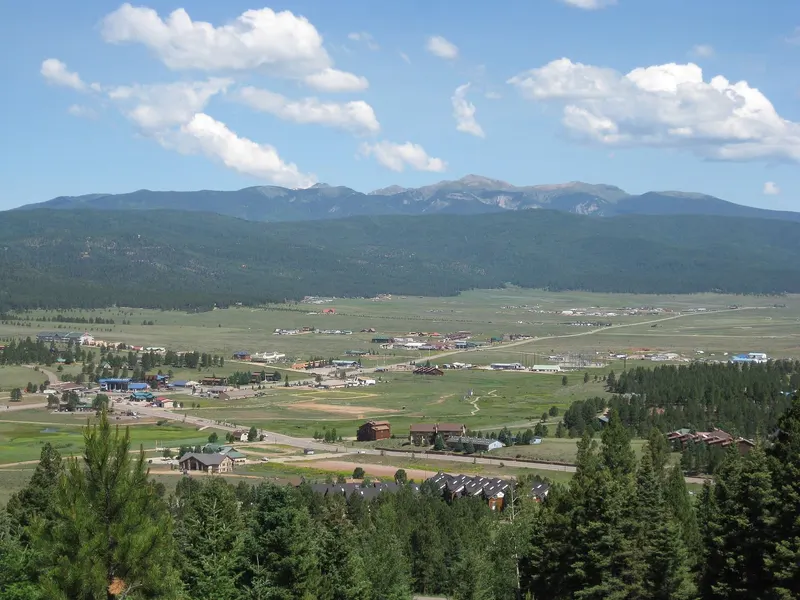

Angel Fire Resort
Angel Fire is a family-oriented Moreno Valley resort with 627 skiable acres, 96 trails, 2,123 feet of vertical, and a broad mix of beginner and intermediate terrain.
Explore the guide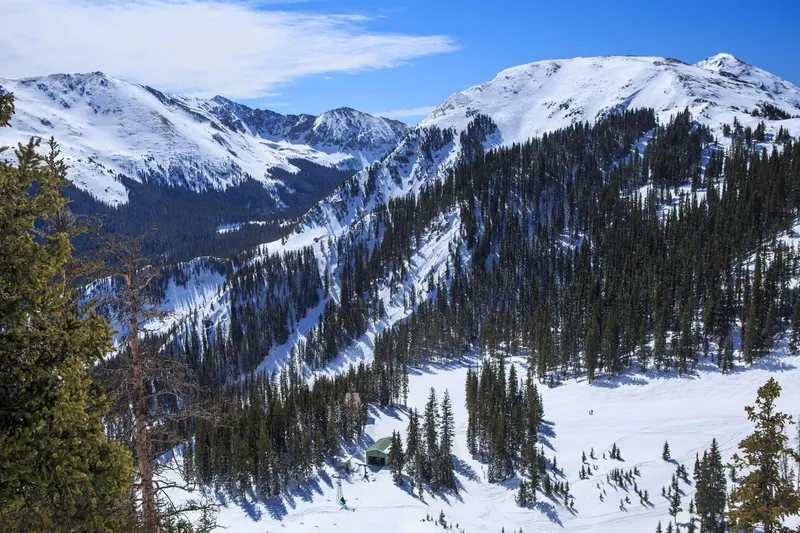
North-Central New Mexico
Taos Ski Valley combines a 12,481-foot summit and expert-weighted terrain with meaningful lower-mountain options: 49% of its 110 trails are beginner or intermediate, and snowmaking covers nearly all of that terrain.
Murray Foubister · Wikimedia Commons · CC BY-SA 2.0The resort's September 9, 2026 release announces opening day on November 26, 2026. It did not publish a closing date; the 2025–26 season closed one week early on March 29, 2026 because of unseasonably warm temperatures.
Official resort site ↗Taos Ski Valley’s official mountain statistics put the base at 9,350 feet, the summit at 12,481 feet on Kachina Peak, and the vertical drop at 3,131 feet. Its 1,294 skiable acres are served by 13 lifts and divided among 110 trails. The trail mix is 24% beginner, 25% intermediate, and 51% expert, so the reputation for steep skiing is grounded in the numbers without making the lower mountain irrelevant.
Beginner and intermediate terrain has an operational advantage: the resort says snowmaking reaches nearly 100% of both categories. Expert terrain is less predictable. Kachina Peak is a marquee zone whose opening is entirely snow-dependent. After storms, patrol may first open it as a hike of roughly 30–45 minutes up the ridge before operating the chair. Highline Ridge is about a 15-minute bootpack from the top of Lift 2, and West Basin Ridge is another hike-to area. Those zones should be treated as conditional options, not promised parts of an itinerary.
The mountain averages 300 inches of snowfall, but an average is not a trip forecast. Taos also operates under a special-use permit from the USDA Forest Service in Carson National Forest. The ski area dates to 1955–56, when Ernie Blake founded it; Jean Mayer arrived in 1957 and established the ski school and Ski Week tradition. That history helps explain the strong lesson culture, but current terrain and operations still come from the resort’s dated reports.
Elevation difference: 3,131 ft.
Data: resort statistics as cited on this page. CDC notes altitude illness can occur around 8,000 ft and sometimes lower.
Checked .
NM-150 climbs through Arroyo Seco and ends at the ski-valley parking lots. The resort is about 19 miles from the town of Taos, but its official material does not publish a town-to-base drive time. It does publish planning estimates of 89 miles and two hours from Santa Fe, and 152 miles and three hours from Albuquerque. Weather and traffic can change those figures.
Winter vehicle guidance is unusually direct. The resort FAQ says AWD, 4WD, or chains are required for all vehicles driving to Taos Ski Valley during winter months. That is a resort requirement, not a forecast that the road will be difficult every day. Road conditions still need a same-day check before starting NM-150.
The resort also says Uber and Lyft are not available in Taos. The practical alternatives are a rental vehicle or one of the local shuttle operators listed in its getting-here material. Its beginner guide says parking is free, with optional paid spots closer to the base, and that free shuttles run daily in winter from 8 a.m. to 5:30 p.m. Because the resort does not publish stable winter parking fees or reservation details, its current parking page is the source to consult before departure.
Flying into Taos is another option. The resort’s September 9 release says Taos Regional Airport will again have JSX nonstop flights from Austin and Dallas four days a week and from Carlsbad three days a week, plus twice-weekly Contour Airlines connections from Denver International Airport. Check current schedules with the airlines before booking.
Taos Ski Valley
Planning location: 36.590°, -105.437°. Confirm the entrance and current access before traveling.
Open the location map ↗Coordinate: Wikipedia: Taos Ski Valley
Checked .
The 2025–26 season opened on Thanksgiving, November 27, 2025. It then closed on March 29, 2026, one week earlier than planned, because the resort cited unseasonably warm temperatures and changing conditions. That early close is a useful warning against treating a scheduled end date as guaranteed skiing.
For 2026–27, the resort’s September 9 release announces opening day on November 26, 2026. Early-season adult lift tickets start at $75 until December 10, and the resort says buying at least 72 hours ahead can save up to 33%. The release did not publish a closing date, and an opening date does not say which lifts or zones will run that day; the conditions report answers that closer to arrival.
That early close was not unique to Taos. Across the state, Ski Santa Fe closed on March 22 against a plan to run into April, and Sipapu closed in late March after cancelling its Pond Skim for lack of snow. Taos News described that winter as the warmest in at least 131 years. One warm season does not set a pattern, but it does argue against booking the last week of a published window. A statewide view of the New Mexico winter covers what is still worth the trip when the snow is thin.
The combination of a 300-inch annual average and broad snowmaking on easier terrain supports a long planning window, but it does not remove day-to-day uncertainty. Patrol work and snow coverage can affect which advanced zones open. Kachina Peak and the hike-to ridges require a conditions check even when the lower lifts are running.
Dates from the resort's own announcements, as recorded in this guide
Checked .
Altitude deserves a plan here. The resort’s health-and-safety guidance says altitude illness is usually preventable when ascent is slow, with symptoms most likely above 8,000 feet. It notes that fitness does not determine acclimatization. The resort recommends sleeping a night or two lower first and names Taos, Albuquerque, Santa Fe, and Denver as examples. It then recommends taking it easy on arrival, favoring a high-carbohydrate diet, and avoiding alcohol, tranquilizers, and sleeping pills during the first two nights.
Sun exposure also remains relevant in cold or cloudy weather. Resort guidance calls for SPF 30 or higher reapplied every two hours and full UV eye protection. Mogul Medical provides urgent care on the mountain at 5 Firehouse Road, while the New Mexico Ski Safety Act governs skier responsibilities.
Beginners can choose lower-mountain or all-mountain access. The resort’s beginner guide says all first-time and children’s lessons include a lift ticket and rentals; for any other lesson, confirm what the booking includes. Reserved rentals can be picked up from 3 p.m. the day before, which avoids a morning queue. The Ernie Blake Snowsport School offers the resort’s lesson programs. Staying in the town of Taos rather than at the ski village adds the NM-150 commute, but it also follows the resort’s own suggestion to sleep at a lower elevation while acclimatizing.
Data: the resort’s own published terrain breakdown
Checked .
No. The official trail mix is 24% beginner, 25% intermediate, and 51% expert. Snowmaking covers nearly all beginner and intermediate terrain, although the mountain's expert terrain is a defining part of its character.
The resort says AWD, 4WD, or chains are required for every vehicle driving to Taos Ski Valley during the winter months. Check current road and resort guidance before departure.
The resort's September 9, 2026 release announces opening day on November 26, 2026, with early-season adult lift tickets starting at $75 until December 10. The release did not give a closing date. Opening terrain still depends on snow and snowmaking, so check the resort's conditions report before the trip.
Yes. For 2026–27, the full Ikon Pass includes seven days at Taos Ski Valley; Ikon Base includes five days with blackout dates. The Mountain Collective pass includes two days plus additional half-price days. Other products have different terms, so check the exact pass and current destination requirements before booking.
There is no fixed opening date. The resort describes Kachina access as entirely snow-dependent; patrol may open hike-to access before the chair runs after storms.
No. The resort's getting-here guidance says Uber and Lyft do not operate in Taos, so visitors need a rental car or a local shuttle operator.
It is the steepest trail map in New Mexico on paper, but not an expert-only mountain. The official split is 24% beginner, 25% intermediate and 51% expert, and the resort says snowmaking reaches nearly 100% of both the beginner and intermediate terrain, so the easier half is also the most reliably open half. The genuinely hard skiing is concentrated in hike-to zones: Kachina Peak, Highline Ridge at about a 15-minute bootpack from the top of Lift 2, and West Basin Ridge. Those are conditional options, not fixed parts of a day.
This guide does not rank resorts, so here is what decides it. Taos is the largest ski area in New Mexico on every published measure: 1,294 acres, 3,131 feet of vertical, 110 trails and 13 lifts, averaging 300 inches of snow. It has the state's deepest expert terrain and a long lesson tradition through the Ernie Blake Snowsport School. The costs are real too. AWD, 4WD or chains are required in winter, Uber and Lyft do not operate in Taos, and the base sits at 9,350 feet, above the elevation where the resort's own health guidance says altitude illness becomes likely. It suits a multi-day trip with a lower-elevation night first more than a first-timer's single day.
The mountain averages 300 inches a year by the resort's own figure, but an average is not a season and it is not a forecast. This guide does not republish live snow totals, because a number copied here would be wrong within a day. Take the current base and 24-hour totals from the resort's conditions report. The 2025–26 season is the useful caution: it closed on March 29, 2026, one week early, on unseasonably warm temperatures and changing conditions.
Angel Fire is a family-oriented Moreno Valley resort with 627 skiable acres, 96 trails, 2,123 feet of vertical, and a broad mix of beginner and intermediate terrain.
Explore the guide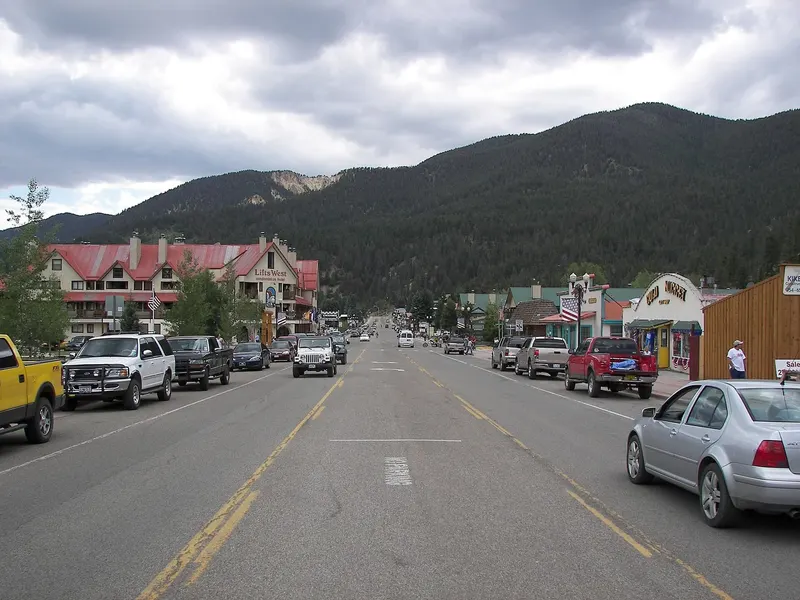
Red River is a town-integrated, family-owned ski area with 285 acres, 64 trails, 1,600 feet of vertical, and lifts rising directly from a high-elevation Main Street community.
Explore the guide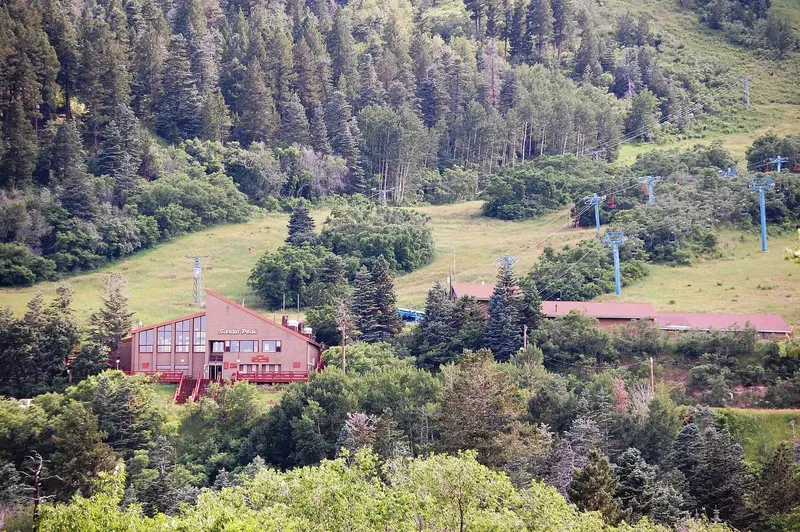
Sandia Peak is a rebuilding Albuquerque-area ski operation whose 2025–26 season lasted only about five weeks; verify current ski-area status separately from the year-round Sandia Peak Tramway.
Explore the guideOfficial visitor information: Taos Ski Valley mountain information, Taos Ski Valley directions, Taos Ski Valley 2026–27 opening announcement (September 9, 2026), Taos Ski Valley beginner guide, Mountain Collective Taos Ski Valley terms, Taos Ski Valley frequently asked questions, Taos Ski Valley parking guidance, Taos Ski Valley health and safety guidance, Taos Ski Valley history and background, Taos Ski Valley terrain overview, 2026–27 Ikon Pass product comparison, Taos Ski Valley Chamber 2025 opening day, Taos News report on the 2026 early closure.
Photography via Wikimedia Commons. Images resized and cropped for layout; individual credits and reuse licenses are listed below.
Guide details checked . Confirm current conditions before traveling.

