
.jpg)
On the trip It shines only red, so it can't flash white at the observers on the next pad.
Skip it if your headlamp has a red mode. It has no white light for trails.
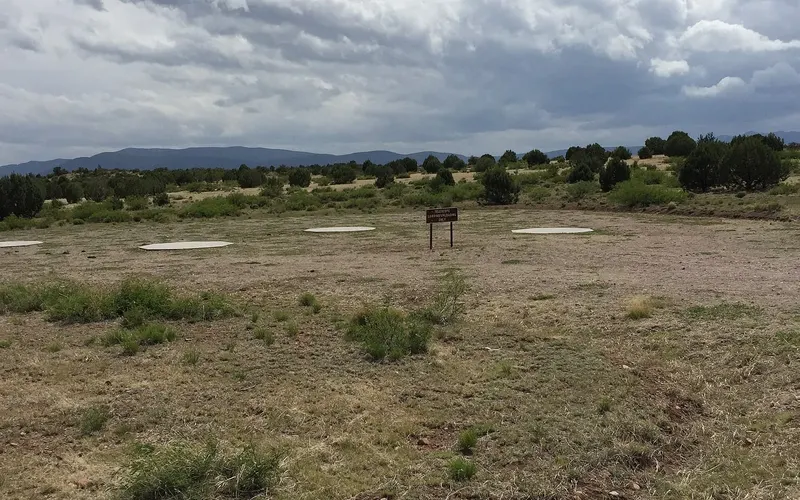
Gila National Forest
Plan a night at Cosmic Campground, a free, first-come dark-sky sanctuary with four telescope pads in Gila National Forest. No potable water; arrive before dark.
Gila National Forest · Wikimedia Commons · CC BY-SA 2.0Access check, September 29, 2026: the Forest Service campground page, updated September 25, lists Cosmic Campground open year-round after a temporary closure listed earlier in September. Check it and the Gila alerts again on the day you drive.
Cosmic Campground is a 3.5-acre observing site in Gila National Forest with an unusual priority: nighttime darkness comes before developed campground amenities. The site has four concrete telescope pads, one vault toilet, an information kiosk, picnic tables, and primitive campsites. It has no potable water and very little shade; the Forest Service says a shade pavilion is planned as funding allows. Camping is free, requires no reservation, and is first come, first served.
That combination makes the campground useful for observers who can be self-sufficient. It also makes arrival planning more important than it would be at a developed state park. Bring water, food, and a full fuel tank, then reach the site before headlights begin affecting other visitors’ night vision.
DarkSky International describes a Sanctuary as a remote, vulnerable dark place. A Dark Sky Park protects dark conditions through responsible lighting and public education on conservation land; a Reserve joins a dark core to a surrounding support zone. None of these designations overrides a closure or other access rule.
Cosmic Campground was designated on January 14, 2016. The Gila National Forest identifies it as the first International Dark Sky Sanctuary in North America and the first on National Forest System land.
The certification effort was led by Patricia “Annie” Grauer with Dr. Al Grauer. Bill McCabe initiated the concept in 2003. The designation protects a small site whose setting supplies the larger advantage. According to the Forest Service, the nearest significant source of artificial light is more than 40 miles away, across the Arizona state line, and the observing area has an unobstructed 360-degree view.
The campground is eight miles north of Alma off US-180. Look for a brown Forest Service sign between mileposts 37 and 38, then follow the access road for 1.3 miles. The published coordinates are 33.47994, -108.92287, and the campground is at about 5,364 feet.
Glenwood is about 12–14 miles south. Sources vary within that range. Glenwood has stores, places to eat, and lodging, but the campground itself does not supply food, water, fuel, or hookups. Finish those errands before driving north, especially when the arrival is timed for daylight.
The four concrete pads are for telescopes and observation. Do not park a vehicle or build a campfire on them. The information kiosk, picnic tables, and vault toilet are the other listed facilities. Minimal shade and no potable water make water and shade planning part of even a night-focused visit.
The campground is open year-round. Stays are limited to 14 days, and no more than two vehicles are allowed at a campsite. Pets must be leashed. Off-highway vehicles, hunting, shooting, and stock are prohibited. Quiet hours run from 10 p.m. to 6 a.m., and the Forest Service recommends no generator use during them. No trash service is listed, so plan to carry out what you bring.
Campfires are not allowed on the observation pads. Separate fire restrictions can change with conditions, so an absence of a permanent pad rule does not confirm that a fire is currently allowed elsewhere. Check Gila National Forest alerts before departure.
The site has no drinking water, and the Forest Service asks for red-filtered lights.
As an Amazon Associate, we earn from qualifying purchases.
On the trip It shines only red, so it can't flash white at the observers on the next pad.
Skip it if your headlamp has a red mode. It has no white light for trails.
On the trip Fill this food-grade can, which comes with a pour spout, in town before the drive north.
Skip it if you already own a water jug. It pours from a spout, not a spigot, so you tip the can.
Cosmic Campground
Planning location: 33.480°, -108.923°. Confirm the entrance and current access before traveling.
Open the location map ↗Coordinate: OpenStreetMap: Cosmic Campground
Checked .
The Forest Service asks visitors to arrive before dark because vehicle headlights are a major source of light pollution. Once on site, cover flashlights with a red filter. Keep vehicles and fires away from the telescope pads. These are the site’s published practices for limiting artificial light.
A dim red headlamp, like the one above, meets that request and keeps both hands free for a telescope or chart. For binoculars and a tabletop telescope, see our beginner stargazing kit, and bring whatever you already own before buying anything.
The official site does not publish a Sky Quality Meter or Bortle value. The useful official statements are the distance from significant artificial light and the unobstructed view. Do not substitute an unofficial darkness number for the Forest Service’s current alerts and access information.
The Forest Service identifies late May through late October as the best period for viewing the Milky Way. That window overlaps the summer monsoon, when afternoon storms are the practical constraint. Moonlight is the other one: the New Mexico dark-sky calendar lists Cosmic Campground’s moonless evening windows and the start of astronomical darkness for each month. Arriving before dark should not mean arriving without checking the day’s weather and the forest alert page.
Fire restrictions and area closures are volatile. The Gila National Forest lifted its forest-wide fire restrictions on July 20, 2026, but restrictions and closures can return with conditions, regardless of the campground’s year-round status. The Gila National Forest alert page is the place to verify them close to departure. The Glenwood Ranger District can also be reached at (575) 539-2481.
Plan for a simple, self-sufficient observing site: four pads, few facilities and no water. Check access on the day, prepare supplies in town, and follow the Forest Service’s recommendation to arrive before dark.
Yes. The Forest Service says no fees are required, and all sites are first come, first served, without reservations.
No. The Forest Service says potable water is not available. Bring all drinking water, food and enough fuel for the trip.
There are four concrete telescope and observation pads. Vehicles and campfires must stay off the pads.
The Gila National Forest identifies late May through late October as the best Milky Way viewing period. Summer monsoon storms, fire restrictions, and closures can still change a trip.
The Forest Service asks visitors to arrive before dark and place a red filter over flashlights, because headlights disturb other observers' night vision. A dim red headlamp does the same job hands-free.
Yes, as of our September 29, 2026 check. The Forest Service campground page, updated September 25, lists the site open year-round after a temporary closure listed earlier in September. Closures and fire rules can change quickly, so check the official page and Gila National Forest alerts on the day you drive.
Yes. All sites are first come, first served, with no reservations, a 14-day stay limit and no more than two vehicles per campsite.
Cosmic Campground was the first International Dark Sky Sanctuary in North America and the first on National Forest System land. Its 3.5-acre site has four dedicated telescope pads, an unobstructed 360-degree view, and no significant artificial-light source within more than 40 miles.
It suits self-sufficient observers who want four telescope pads and a remote setting more than campers who want amenities. There is no potable water and very little shade, and the drive is long from any city. Pick a low-moon night on the dark-sky calendar and arrive before dark.
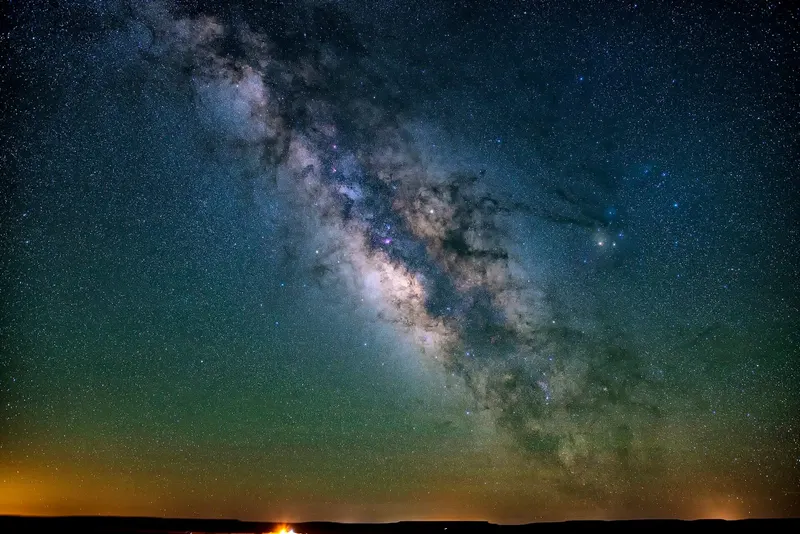
A 12-month calendar of new moons, full moons, moonless evening windows, and sample astronomical-dusk times for New Mexico's nine certified dark-sky places. All times are local in America/Denver.
Explore the guideOfficial visitor information: Gila National Forest Cosmic Campground, New Mexico DarkSky Cosmic Campground history, DarkSky International place categories, Gila National Forest alerts, Gila National Forest lifts fire restrictions (July 20, 2026).
Photography via Wikimedia Commons. Images resized and cropped for layout; individual credits and reuse licenses are listed below.
Guide details checked . Confirm current conditions before traveling.
