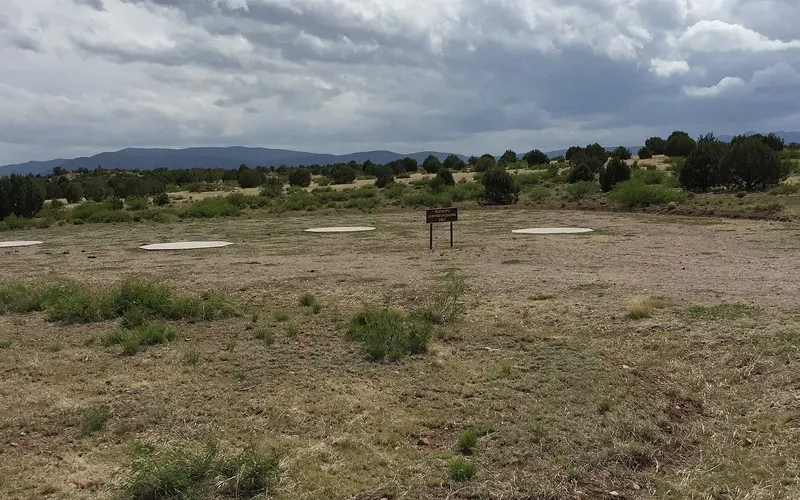
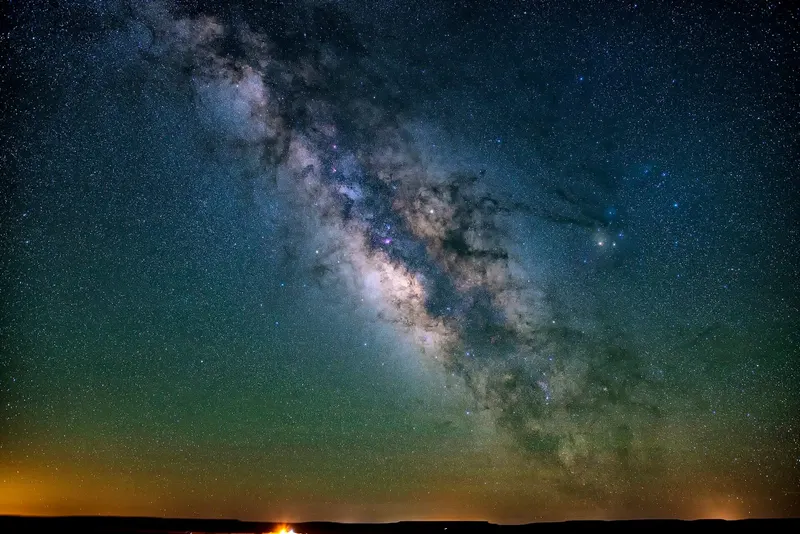
The Milky Way over northwest New Mexico in a 90-second tracked exposure
Northwest New Mexico, 2017; 90-second exposure John Fowler · Commons · CC BY 2.0

Statewide

Stargazing Telescopes for Beginners

Choose binoculars or a beginner telescope for a New Mexico dark-sky trip, with setup tradeoffs, a three-item shortlist and advice on what to borrow first.

John Fowler · Wikimedia Commons · CC BY 2.0
Season
Check moonlight, legal night access, road conditions and weather for your exact observing site.
Where it applies
Statewide

A good first instrument is one you can carry, aim and use comfortably after the drive. Try a sky chart and binoculars before committing to a telescope. Our shortlist follows that progression rather than treating the largest instrument as the right purchase for everyone.

Start with the New Mexico stargazing guide to choose a destination. Use the dark-sky calendar to compare moonlight windows, then confirm the site’s actual nighttime access.

Which setup fits your trip?

Your planStart withMain tradeoffCheck before buying
One casual night outdoorsSky chart and borrowed binocularsLess detail, almost no setupCan you hold and focus them comfortably?
Repeated trips with limited car spaceModerate-power binoculars such as 7x50Wide views rather than close planetary detailWeight, eye relief and weather resistance
Learning the Moon and brighter deep-sky targetsA small tabletop reflectorMore setup and storageA stable surface, included eyepieces and room for the base
Reading a chart in darknessA dim red lightBright red light can still disturb othersLowest setting and the site’s lighting rules

These are trip-fit judgments, not a ranking based on field testing. If you have access to a public astronomy event, try different instruments before ordering.

Why start with 7x50 binoculars?

NASA’s beginner guidance puts binoculars in the 7x35 to 10x50 range on the beginner path. A wide view helps you find your way around the sky.

For the selected Cometron, Celestron publishes 7x magnification, 50mm objectives, a 6.6-degree field of view and a weight of 774g. It is water-resistant, not waterproof. Its listed 13mm eye relief is worth trying in person if you observe with glasses.

Higher-power 15x70 binoculars, also shown in our stargazing section, need more attention to support and steadiness. They are a different choice from a compact beginner setup. Budget space for a suitable mount instead of assuming a larger binocular will be easier to use.

When does a tabletop telescope make sense?

The Sky-Watcher Heritage 130 has a 130mm aperture and 650mm focal length, with a collapsible tube and tabletop base. Its practical appeal is the compact format; the main trip constraint is the stable surface it needs.

Choose it if you want to spend time learning to aim and focus a telescope and can accommodate its base. Before ordering, check the current package contents and the manufacturer’s setup instructions. A wobbly table can undermine the view regardless of the instrument’s specifications.

Skip this format if your only setup spot is uneven ground with no steady platform. Borrowing at an astronomy event can help you decide whether you prefer a tabletop design or a full-height mount.

Three options for a first observing kit

These are researched selections based on published specifications, not hands-on tests. You do not need all three: borrow binoculars first, add a telescope for detail, and keep any red light dim.

As an Amazon Associate, we earn from qualifying purchases.

Celestron Cometron 7x50 Astronomy Binoculars

Who it’s for Beginners learning the night sky with a wide-field binocular before choosing a telescope.

Why we picked it Celestron positions the 7x50 Cometron as an easy, affordable first astronomy instrument with a wide field for scanning the Milky Way.

Pros

  • 7x magnification supports wide-field sky scanning
  • 50mm objective lenses with multi-coated optics gather more light
  • Designed explicitly for beginners

Know before you buy

  • Skip it if you already own 7x50 or 10x50 binoculars.
  • Eye relief is short for glasses.

On the trip Use the wide field to learn constellations at a New Mexico dark-sky site before moving to the narrower view of a telescope.

Sky-Watcher Heritage 130mm Tabletop Dobsonian

Who it’s for Beginners who want a 130mm reflector in a collapsible tabletop design.

Why we picked it Sky-Watcher combines more than five inches of aperture with an all-in-one base and optical tube that arrives fully assembled.

Pros

  • 130mm aperture with an f/5 optical design
  • Collapsible all-in-one tabletop design
  • Includes 10mm and 25mm eyepieces plus a star-pointer finderscope

Know before you buy

  • Needs a stable tabletop or platform; include that in your transport plan.
  • Confirm current accessories and seller return terms before ordering.

On the trip Set the tabletop base on a stable surface and confirm that the New Mexico observing site permits access after dark.

Celestron Night Vision Red LED Headlamp

Who it’s for Hands-free telescope setup and chart reading without switching on a white beam.

Why we picked it The red-only LED is designed to preserve dark adaptation and offers two brightness levels for astronomy tasks.

Pros

  • Red-only LED with two brightness levels
  • Blinking and SOS modes
  • Adjustable head strap and 45-degree lamp angle
  • Up to 100 hours of battery life on standard AAA batteries

Know before you buy

  • Skip it if your headlamp has a red mode.
  • It has no white light for trails.

On the trip Keep it on the dimmer red setting around other observers at New Mexico dark-sky sites and public star programs.

What should you pack besides optics?

Bring warm layers, water, a usable map and lighting that respects the observing site. The National Park Service explains dark adaptation and the value of dim red lighting. Keep screens and lights low, and avoid shining them toward other observers.

Before a remote drive, check our official roads and weather resources. A moonless night is a planning opportunity, not a promise of clear skies or open gates. For facilities and lighting rules at one observing site, see our Cosmic Campground guide.

Before you place an order

Check the exact model, included accessories, seller and return terms. Compare the total setup you need, including a support or table, rather than the instrument alone. We do not publish a static Amazon price or imply that these products are always in stock.

For other outings, use the New Mexico gear hub. If the same trip includes a winter walk, the snowshoe guide explains why renting first can be useful.

Questions before you go

Do I need a telescope for a New Mexico dark-sky trip?

No. Begin with the sky you can see unaided and a chart. Binoculars offer a portable next step; a telescope is useful when you want more detail and can bring a stable setup.

Can I put a tabletop telescope anywhere?

It needs a stable, level surface and a clear view. Check that your planned observing place has a suitable setup space; do not assume a campsite picnic table will be steady or available.

Sources & photo credits

Official visitor information: NASA Night Sky Network: binoculars for beginners, Celestron Cometron 7x50 specifications, Sky-Watcher Heritage 130 specifications, National Park Service: dark adaptation and red flashlights.

Photography via Wikimedia Commons. Images resized and cropped for layout; individual credits and reuse licenses are listed below.

View image sources & credits

Guide details checked . Confirm current conditions before traveling.